

How to Spot a Genuine Leather Sofa
With a soft, buttery leather upholstery the sofa looks stunning in any space. Customers love its simple styling and its high-end genuine leather upholstery.
However, distinguishing genuine leather from fake leather can be a challenge to the untrained eye. Here are six ways to tell the difference between real and faux: 1. Rough edges.
1. Take a look at the label
Real leather has a distinct look and feel that's hard to replicate. It is also durable, easy to clean and doesn't absorb excess body oils. This makes it perfect for those suffering from allergies. Not all leather sofas, however, are created equal. Some retailers are even known for passing off PVC as genuine Leather.
To avoid being scammed, it's crucial to be aware of the various kinds of leather. This includes determining the full grain and top-grain leather, as well evaluating the quality of the upholstery. Retailers with discerning eyes are more than willing to share this information So don't hesitate inquire!
The first step in identifying the genuine leather sofa is to look at the label. It should clearly state what kind of leather it is upholstered with, along with any other material such as fabric or cotton. The most reliable suppliers will also have clear policies regarding exchange or return if you are not happy with your purchase.
If the sofa doesn't have a label however, you can still figure out its authenticity by looking at the fabric backing or by opening the cushion casing to look for synthetic material. You can also check the texture of the leather and determine if it has any bumps or imperfections, as these are telltale signs that you're dealing in fake or the leather is bonded.
You can also test the sofa's integrity by rubbing its surface. Genuine leather has a soft, smooth texture. Bonded or faux leather is rougher and feels more like suede. Additionally, you will be able to discern the difference between wrinkles and bumps of genuine leather as well as the patterns printed on faux leather.
While a genuine leather sofa may cost more than a imitation counterpart but it's an investment that will last longer and will be a family heirloom over the years. You can minimize the damage that's caused by sun, ozone, heat and humidity by placing your leather sofa in a cool, dark room away from fireplaces, heaters and air conditioning. Additionally, you can use leather protection creams to keep your sofa in good shape and strong.
2. Take a look at the back
If the label doesn't tell you what kind of leather a sofa is, it's essential to get up-close and intimate with it. sofasandcouches , feel and backing will all be a clear indication of authenticity.
If you touch the surface of genuine leather, it won't feel smooth and perfect. This is due to the fact that animal hides have a variety of pores that allow them to breathe. However, a product that is smooth and soft could be fake leather.
Another thing to be aware of is uneven or bumpy surface. Genuine leather is made by rubbing away some of the rough outer layer. If the material that covers your sofa is top grain leather, there should still be some bumps.
You can also test leather by putting your fingers into it and running it over it. If the leather is genuine it will stretch and wrinkle just like human skin. This means that it is able to breathe, ensuring that the leather doesn't get dry and crack over time.
Faux leather is printed, and thus has a uniform pattern however genuine leather has natural imperfections that enhance its beauty and durability. This can be seen in scratches, creases and scuffs. Genuine leather will be supple and a bit stiff when it's new. But, it should not dry out or crack when you treat it regularly with a leather protection cream.
Some furniture manufacturers combine real leather with synthetic leather in order to save money. The 'contact areas' such as the arm rests, seats and backs, are constructed from genuine leather, while non-contact parts, such as the base and outside arms are upholstered in a less expensive polyurethane or a synthetic leather. This is a standard practice however, even if the sofa has authentic leather labels, you should check it closely to see what the backing is made of, since it is a clear indication that it's not authentic leather.
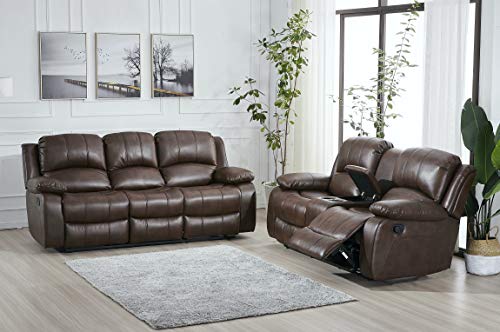
Labels and prices can point you in the right direction, but to be sure a sofa is genuine leather, it's important to be able to get close and intimate with it. Smell it, touch it, and then check its back for a polyurethane backing that is a clear sign that it's not genuine leather.
3. Look at the seat
A genuine leather sofa's seat is also a good indicator of quality. While many faux leather couches use different materials for upholstery Genuine leather has a distinct texture that is smooth to the touch and is not entirely uniform in color and shade. Be aware of bumps on the surface as well as a deep natural scent. These features distinguish genuine leather from fakes and low-grade leather.
Another indicator is if the leather is stitched in a long, continuous piece. While this is not uncommon when using faux leather, if you notice this on genuine top-grain leather, it's most likely to indicate that the sofa is lower-quality and should be avoided.
Pricing and labels may provide a clue, but the only way to determine is to sit down with the furniture. Genuine leather will not be perfect and not feel uneven. It will also have rough edges and fat wrinkles beneath the surface. The softness of genuine leather is distinct from synthetic materials and the temperature of the furniture will reveal whether or not it's built with authentic materials.
A leather sofa is an interior design mainstay for good reason: It's stylish, durable and lasts for a long time. It is also easy to clean and resistant to liquid spills. This makes it a great choice for families who have pets or children. The best thing about genuine leather, however it's that it's a timeless style that won't ever go out of fashion and is accessible at a variety of prices.
For a classic leather couch that will stand the test of time, think about the Pottery Barn Turner. This two-seater may be expensive but it's constructed using top-quality leather that will last for a lifetime. It's an excellent choice for those who have small spaces, too, since it comes in three sizes and is compact enough to fit in most rooms.
If you're looking for something a bit more modern, you should consider this All Modern Geo Genuine Leather Sofa. The couch is a mid-century modern-inspired style with an elegant, angular frame and asymmetrical pillows that combine form and function. The sofa is made from plywood, composite, and plastic. However, the leather is only used in the seating area. It's a step up from Ikea’s faux-leather sofa which was awarded the CHOICE's "Shonky Award" in 2015.
4. Take a look at the smell
Real leather has a distinctive smell. It's an organic, natural scent that cannot be duplicated. If the sofa you're considering buying has a strong artificial smell, it is not genuine. It is usually due to the chemicals used to process leather. These chemicals can linger on furniture long after it's been constructed.
You can test the quality of the leather by moving your fingers across the surface. Genuine leather will feel rough and have lumps and bumps, just as human skin. If it feels smooth and cold it's probably fake or bonded.
You can also take one of the cushions and look at the back. Faux and bonded leather will have some form of polyurethane backing to help support the fabric, whereas true leather has an untreated back that resembles in appearance to coarse suede. If you see a woven fabric backing, it's a dead giveaway that the sofa isn't real leather.
Peter says that the best way to tell whether a sofa is real is to gently run your fingernails over the surface. The scratches on the leather will dull your fingernails, and the surface should stretch and wrinkle slightly. It also feels warm to the touch.
Another way to tell if a sofa is genuine is to turn it over on its side and look at the back of the sofa. Genuine leather is a solid piece of leather, not a plastic coated faux or bond leather.
When deciding on the grade of your leather sofa, think about the amount of use it will get and how long you'd like it to last. The more you use your sofa the more care it will require. Peter suggests a regular, gentle cleaning with a leather conditioner. This will help maintain the leather's suppleness and prevent it from drying out and becoming hard.